




Hong Kong has always been a city defined by logistics. From the bustling container terminals of Kwai Tsing to the dense network of warehouses stretching across the New Territories, the efficient movement of goods is the lifeblood of our economy. Yet, for decades, the interior of these warehouses remained stubbornly old‑school. Shelves were static. Workers walked miles each day. Picking errors cost time and money. Today, a silent revolution is underway, driven by two powerful forces: amr robots and the asrs system.
For business owners, operations directors, and logistics professionals in Hong Kong, understanding the synergy between amr robots and the asrs system is no longer a matter of curiosity—it is a competitive necessity. When autonomous mobile robots meet automated storage and retrieval infrastructure, the result is a warehouse that operates with near‑human intelligence and superhuman speed. This article explores how combining amr robots with a modern asrs system is solving Hong Kong’s most pressing space, labour, and efficiency challenges, all while delivering a compelling return on investment.
The Space Constraint: Why Hong Kong Needs Smarter Automation
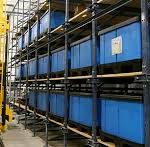
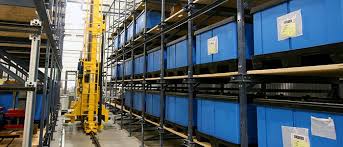
Land in Hong Kong is measured in square feet, and every inch comes at a premium. Traditional warehouses rely on wide aisles to accommodate forklifts and manual workers, which means a significant portion of valuable floor space is dedicated to movement rather than storage. This is where the asrs system first made its mark. By using automated cranes and shuttles to retrieve goods from vertical racks, an asrs system compresses the warehouse footprint dramatically, allowing businesses to build up rather than out.
But a static asrs system, no matter how efficient, only solves half the equation. Goods still need to be transported from the retrieval point to packing stations, and from receiving docks to the storage interface. Enter amr robots. These intelligent, self‑navigating vehicles work seamlessly alongside the asrs system, shuttling totes and cartons across the facility without the need for fixed pathways. In a Hong Kong context, where many warehouses are located in multi‑storey industrial buildings with awkward layouts, amr robots offer the flexibility that traditional conveyor systems cannot match. Together, amr robots and the asrs system create a fully automated ecosystem that maximises every square metre.
Redefining Throughput with AMR Robots and the ASRS System
Throughput—the speed at which goods move in and out of a facility—is the ultimate metric in logistics. Hong Kong’s role as a regional distribution hub means that warehouses here must handle peak volumes that would overwhelm less sophisticated operations. When amr robots are integrated with an asrs system, throughput reaches new heights.
Consider a typical inbound process. Goods arrive at the receiving dock. An asrs system immediately identifies the optimal storage location based on velocity and size. AMR robots then collect the pallets or cartons and transport them to the induction points of the asrs system, where automated cranes take over. The reverse happens for outbound orders. The asrs system retrieves the required items and presents them at a pick station, where amr robots wait to carry them to packing or dispatch areas. This continuous flow eliminates the bottlenecks that plague manual warehouses—no waiting for forklifts, no wasted walking time, no human fatigue slowing down the pace. For Hong Kong distributors serving tight just‑in‑time schedules, the combination of amr robots and the asrs system is nothing short of transformative.
Accuracy and Traceability: The Hidden Benefits
In an era of e‑commerce and high customer expectation, errors are costly. A mis‑picked item leads to returns, refunds, and reputational damage. Both amr robots and the asrs system are engineered for precision. The asrs system uses barcode or RFID scanning to ensure that the exact item, in the correct quantity, is retrieved every time. AMR robots add another layer of verification by scanning location codes and order details before they move any load.
For Hong Kong businesses handling pharmaceuticals, luxury goods, or high‑value electronics, this traceability is non‑negotiable. When amr robots work in concert with an asrs system, every movement is logged. Operators can track a single item from the moment it enters the facility until it leaves. This level of visibility not only reduces shrinkage but also simplifies compliance with regulatory requirements. In a city where cross‑border trade is routine, the ability to provide detailed audit trails gives Hong Kong logistics providers a distinct advantage.
Overcoming Labour Challenges with AMR Robots and the ASRS System
Hong Kong’s labour market is among the tightest in the world. Warehousing roles—often physically demanding and repetitive—face chronic shortages. Young workers increasingly prefer jobs in services or technology, leaving logistics companies struggling to fill shifts. Automation offers a practical, sustainable solution.
Deploying amr robots reduces the need for staff to walk miles across the warehouse floor. An asrs system eliminates the physical strain of reaching high shelves or carrying heavy cartons. Together, amr robots and the asrs system allow a facility to operate with a smaller, more skilled workforce. The remaining staff focus on supervision, exception handling, and system optimisation—roles that are safer, more rewarding, and less prone to turnover. For Hong Kong warehouse operators facing rising wage costs and recruitment difficulties, investing in amr robots and an asrs system is not just about efficiency; it is about ensuring operational resilience for the long term.



More Stories
香港女性必讀:腹腔鏡檢查與結構超聲波全攻略
摺頁印刷與橫額:香港宣傳設計的雙重力量
籃球衫與熱昇華:香港球迷與球隊的潮流新選擇